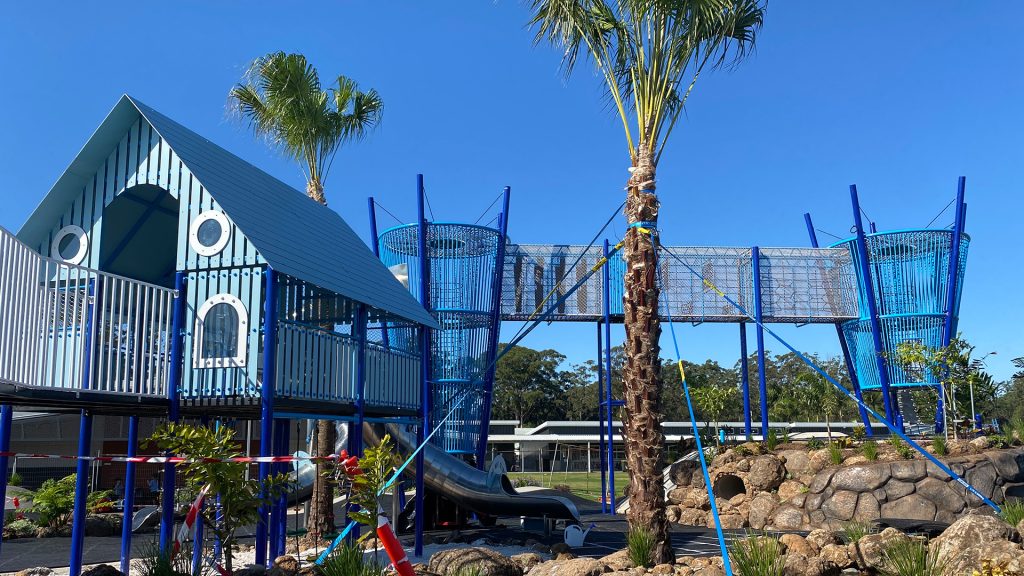
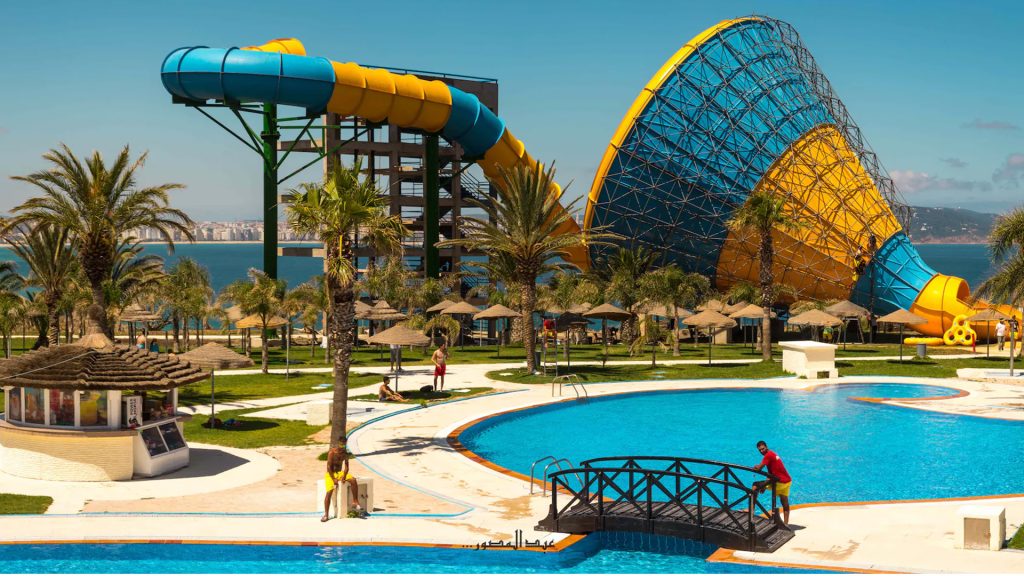
A water park begins long before the first guest steps into the water. Behind the slides, wave pools, and splash pads stands a multi-stage development project, not a single purchase or construction job. A project moves through planning, design, equipment selection, construction, testing, and opening preparation, and each stage depends on decisions made in the one before it.
The final scope depends on five factors: project type, location, target visitors, attractions, and operating model. A resort amenity, a hotel addition, and a destination park may use the same categories of slides and pools, but they are different projects with different requirements. Treat this guide as a planning framework rather than a fixed construction sequence: the exact stages and their order depend on your project, your contracts, and your jurisdiction.
The seven sections below follow the decisions in the order a developer meets them: concept and requirements, site conditions, attractions and layout, design and engineering, equipment and construction preparation, installation and opening, and the brief to prepare before contacting a supplier.
Define Your Water Park Concept and Project Requirements
Four decisions come before everything else: the project type, who it serves, the experience it should deliver, and the initial requirements you can write down now. Every later stage, from site evaluation to equipment selection, builds on these answers.
1.1 Define the project type
The project type routes the whole development:
- Standalone water park: an independent destination that must attract its own visitors.
- Resort-integrated water park: an attraction that extends a resort stay and shares the resort’s guests.
- Hotel-integrated water park: an amenity sized and themed around hotel guests.
- Indoor water park: a climate-controlled venue that can operate year-round.
- Outdoor water park: a seasonal venue shaped by local weather.
Our own projects at MooTon show how type changes the brief: a resort destination in Penang, a family water park in Kumasi, and a second-phase hotel addition in Sanya each took a different route through the same decision.
1.2 Identify target visitors and experience goals
Each visitor group implies a different experience goal:
- Families: shared activities that parents and children can enjoy together.
- Children: approachable, lower-height water play in clearly visible areas.
- Adventure seekers: higher-thrill slides and more intense experiences.
- Resort guests: relaxation and leisure options that extend the stay.
Treat attendance and capacity expectations as project assumptions until your project team validates them.
1.3 Establish initial project requirements
Before talking to a designer or supplier, write down four brief inputs: site location, approximate scale, opening timeline, and attraction direction. They are planning assumptions that later stages will test. The table below maps each stage to its decision.
| Development stage | Question it answers | Decision or output |
| Concept and requirements | What are we building, and for whom? | Project type, visitors, initial requirements |
| Site and conditions | Can the project work here? | Evaluated site and approval path |
| Attractions and layout | What goes in the park, and where? | Attraction mix and zoning plan |
| Design and engineering | Which systems must be coordinated? | Coordinated design direction |
| Equipment and construction preparation | What do we buy, and who delivers what? | Equipment scope and supplier scope |
| Installation, testing, and opening | When are we ready to open? | Tested systems and readiness plan |
| Project brief | What do we send a supplier? | Aquatic Project Brief |
This guide does not test whether the business case works. Revenue models, market analysis, and financing belong to your water park business plan, and starting a water park business is a project stage of its own; this guide begins where that stage ends. The four decisions above now have to be tested against a real place, so the next section evaluates the site and its development conditions.
Evaluate the Site and Development Conditions
Walk the site before anyone draws anything. Filled pools and slide towers concentrate heavy loads, wave pools and slides cycle large volumes of water, and pumps, filters, and treatment systems draw continuous power. Whether a site can carry a water park comes down to conditions you can check before design begins:
- Land: is a defined, usable parcel secured or available for the project?
- Site size: can the developable area hold the pools, slide towers, guest areas, and plant rooms your concept assumes?
- Climate: do local temperatures, seasons, and weather patterns point to an outdoor park, an indoor venue, or a combination?
- Access: can guests reach the entrance, and can delivery trucks and construction equipment reach the work areas?
- Utilities: what water and power capacity exists on site, and what will the park’s pumps, filters, and attractions demand? Your designers should validate both sides of that question.
- Local approvals: which authority having jurisdiction (AHJ) governs the site, and which adopted rules, reviews, and permits apply?
Approval questions look different in every country, region, and municipality. In the U.S., for example, the CDC Model Aquatic Health Code, fifth edition (2024), is model guidance that jurisdictions can use to develop or update their own public-aquatic-venue codes; it is not global law. Its model separates aquatic plan approval from building, zoning, fire, electrical, and structural review, so one project may answer to several authorities. Find out early which AHJ governs your site and which rules it has adopted, rather than assuming a single approval path.
Scale and project type both change the site conversation. A compact parcel pushes the project toward small water park design choices, where zones share space and attractions do double duty. An indoor water park design puts the building envelope and year-round systems at the center of evaluation, an outdoor park plans around season and weather, and a resort project coordinates land, utilities, and guests with the wider development.
No single party answers these questions alone. Owners, designers, suppliers, contractors, and local professionals each carry part of site evaluation.
A site that checks out still needs the right attractions in the right arrangement; the next section turns the concept into a plan.
Plan Attractions and Water Park Layout
You decide what attractions a water park needs by working from your target visitors, site, and operating plan toward a mix and a layout, not by picking popular rides from a catalog.
Choose the attraction mix by decision, not by popularity. Each attraction category resolves a different decision:
- Water slides: set the thrill level and visual identity of the park.
- Wave pools: create a shared, high-energy centerpiece experience.
- Lazy rivers: offer relaxed, all-ages circulation and longer stays.
- Kids play areas: give younger guests approachable water play in dedicated spaces.
- Leisure pools: provide lower-intensity swimming and relaxation.
Select from these categories using the criteria set in your concept stage: target visitors, site conditions, budget direction, desired thrill level, business positioning, utilities, and the operating plan. The categories also spend the budget differently: water slide cost scales with height, diameter, and theming, so budget direction is a real criterion, not an afterthought. Feature popularity alone is not a criterion, because an attraction that works in one development context can be wrong for another. No attraction should be specified for your park without your project inputs.
Plan the layout around guests and operations. Layout turns the attraction mix into a workable park. Four elements matter:
- Guest flow: how visitors enter, circulate, queue, and move between zones.
- Attraction zones: grouping slides, family areas, kids play, and leisure spaces so each visitor group finds its experience.
- Supporting facilities: changing rooms, food and beverage, shade, and seating placed where guests need them.
- Back-of-house areas: the service spaces guests never see, including water treatment equipment rooms, storage, and staff access.
Three MooTon projects, three different answers. Each one shaped its mix and zoning around its own development context:
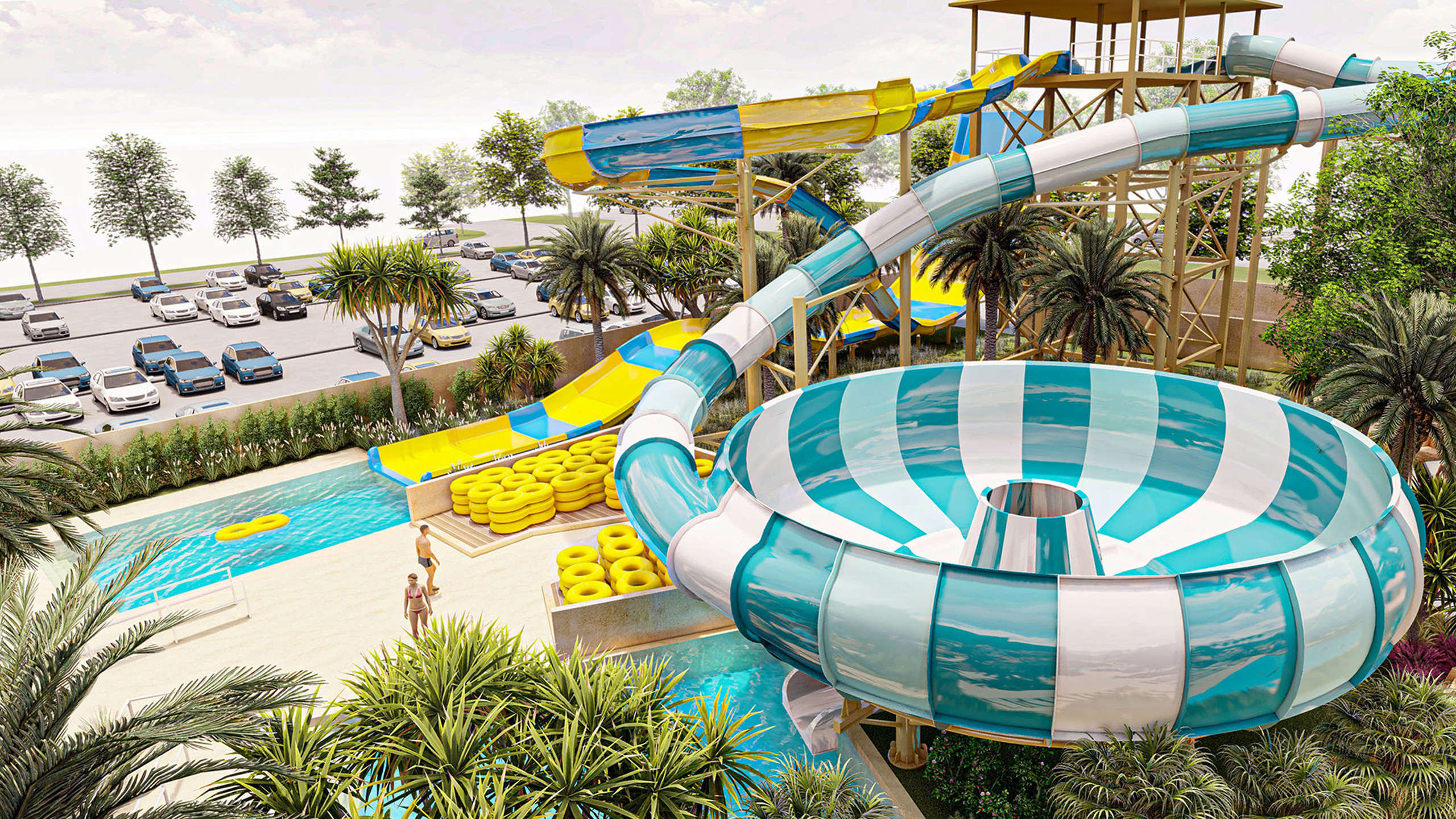
- At Bertam Resort Water Park in Penang, Malaysia, an all-ages resort destination of 182,987 sq ft combines super-bowl and combined slides, a wave pool, an interactive water house, a lazy river, and dry spray play.
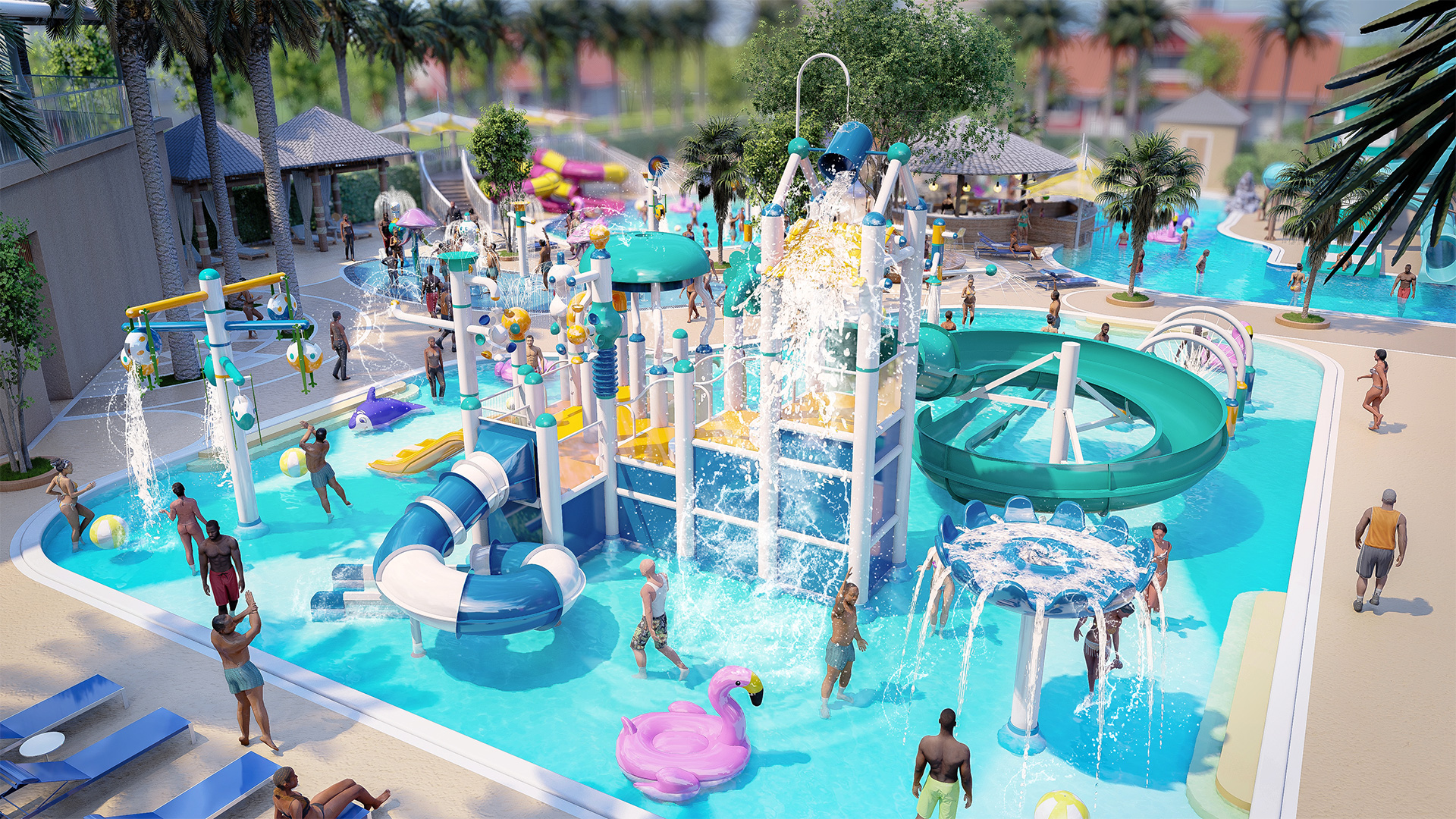
- The Kumasi family water park in Ghana organizes 4,200 m² into four zones: dry spray, a children’s pool, a children’s water house, and adult slides.
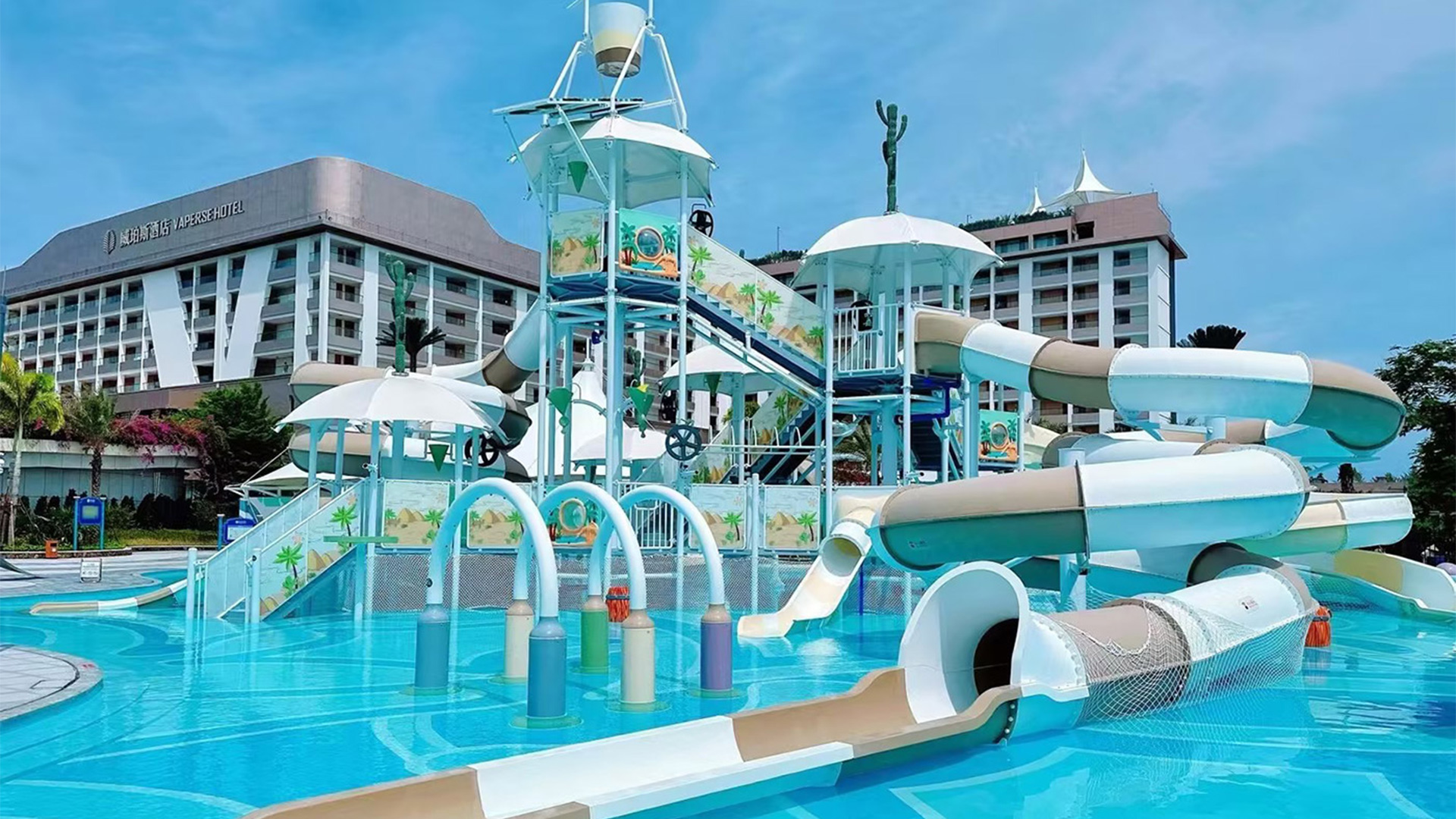
- The Vaperse Hotel project in Sanya, Hainan adds five play areas, a children’s splash pad, a family slide, a spiral slide, a thrill-slide group, and a lazy-river leisure area, as a 6,300 m² second phase of a hotel development.
None of these mixes is a template. Development context, guest mix, and zoning change the brief every time, and a feature list that worked in Penang, Kumasi, or Sanya says nothing about cost, schedule, or attendance at your site.
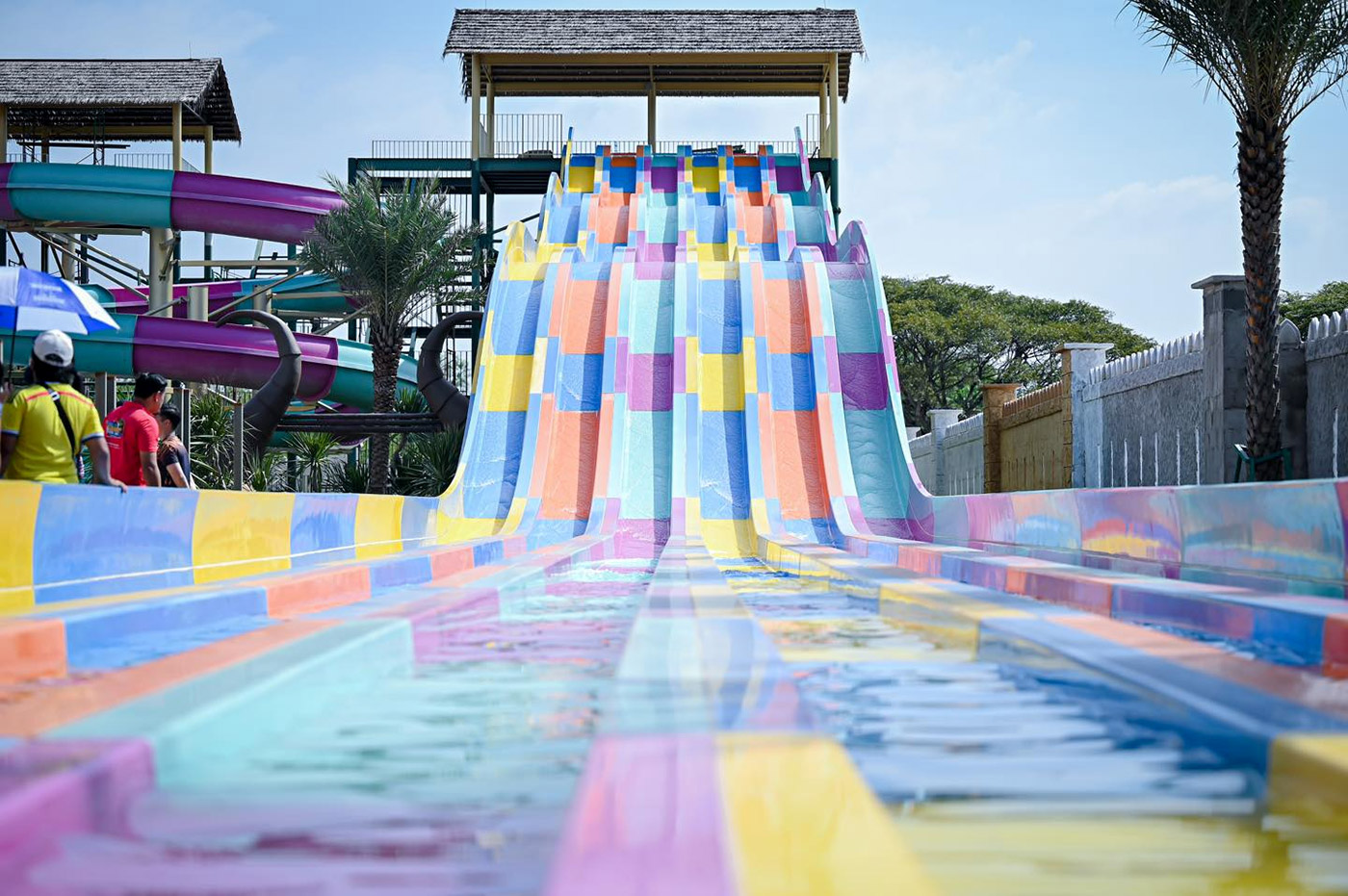
This section stays at the decision level. The craft that follows, from how to design a water park in full to water park layout logic and water slide design detail, builds on the mix and zoning choices made here.
Develop the Water Park Design and Engineering Plan
Design is where the concept becomes documents an engineer can check and a contractor can build. A water park is not just installing equipment: slide towers need foundations, pools need shells and filtration, pumps need power, and guests need safe, accessible routes into the water. The design and engineering plan coordinates these systems into one set of documents, and a gap in any one of them rewrites the others.
The systems that have to come together:
- Architectural design: the buildings, enclosures, and guest facilities that house or surround the water attractions.
- Attraction design: the shape, height, and position of every slide, pool, and play structure within the site plan.
- Structural requirements: the loads that water-filled pools, slide towers, and equipment place on the site and any buildings.
- Water treatment systems: the recirculation, filtration, and disinfection each body of water depends on to operate.
- Electrical systems: power, controls, and lighting for pumps, attractions, and guest areas.
- Accessibility: for relevant U.S. projects, accessible routes and means of water entry are early design inputs, not late additions; the U.S. Access Board’s guide to swimming pools, wading pools, and spas shows the technical scope, and your team should confirm the applicable ADA or ABA scope, alteration conditions, and exceptions for your project.
- Maintenance requirements: equipment rooms, chemical storage, and service access planned into the design rather than retrofitted later.
How detailed does this coordination get? One concrete measure: the design-report provisions in the 2024 fifth edition of the U.S. Model Aquatic Health Code name site and utility information, venue layout and intended use, water and sewer connections, recirculation and treatment diagrams, equipment-room and chemical-storage information, and drainage and hygiene facilities. That is a U.S. model code, not a universal checklist; your authority having jurisdiction and the locally adopted rules decide what your project must submit.
The practical implication is timing. These inputs are reconciled while the project is still lines on drawings, when changes are cheap. Size a treatment system after the layout is frozen, or locate an equipment room after the structures are fixed, and one late decision forces redesign across disciplines. The same systems list produces different engineering answers for different projects: a resort amenity sharing utilities with a hotel and a standalone destination on raw land work through the same disciplines and come out different. An indoor venue concentrates even more of this coordination inside one building envelope, which is why the indoor or outdoor decision from site evaluation carries so much weight here.
A coordinated design still has to become equipment on site; the next section covers equipment selection and construction preparation.
Select Equipment and Prepare for Construction
Water park equipment and construction are coordinated through two linked moves: select equipment against your project decisions, then fix in writing exactly what the supplier delivers and what stays on your side of the contract.
Select equipment against the project, not the catalog. Five considerations drive equipment selection:
- Project goals: what the park must deliver for its target visitors and business positioning.
- Capacity: the guest volumes your concept assumes, still a planning assumption at this stage.
- Theme: how the equipment carries the park’s visual identity and story.
- Guest experience: the thrill level, age coverage, and comfort the attraction mix promised.
- Supplier scope: which parts of delivery the supplier handles and which remain with the owner and its contractors.
Define supplier scope precisely. A water-park equipment supplier’s scope can include equipment manufacturing, documentation, shipping, installation support, and testing. What is included is defined by your proposal and contract, so confirm the list for your project rather than assuming a standard package. Whatever sits outside the contracted supplier scope, such as civil and site works or local approvals, remains with the owner side and its local professionals, and it needs the same early planning as the equipment itself.
At MooTon, our published process runs in eight stages: Project Communication; Concept & Custom Design; Proposal & Contract Confirmation; Equipment Production; Shipping & Site Coordination; Installation & Testing; Opening Support; Maintenance & After-Sales. Use the stage names as a map for the conversation; what each stage covers for your park is defined by your proposal and contract.
What a water park budget is made of. The same slide carries a different price at a different height, diameter, and level of theming, and installing it on a serviced parcel is a different job from installing it on raw land; a compact kids’ venue and a destination park with slide towers and a wave pool sit in different budget leagues altogether. Project costs vary depending on equipment scope, customization, site conditions, and installation requirements. Water park equipment cost is only one layer of that total; site works, installation, and opening preparation each add their own to the cost to build a water park. The only real number for your project is the one in a project-specific quotation.
If you are comparing suppliers, the water park equipment categories and process stages on our site show what a manufacturer-side scope can cover, a useful reference when you draft questions for your first supplier conversation.
Equipment delivered and installed is still not an open park; the next section defines opening readiness.
Complete Installation, Testing, and Opening Preparation
A finished installation is not an open park. The park is ready when the pumps run, the water treatment holds, the slides pass testing, the staff are trained, and the owner has confirmed each of these with evidence in hand. Readiness is verified, not scheduled.
Work through readiness as a checklist:
- Installation completion: every slide, pool, and play structure installed in line with the project documentation, with nothing deferred to “after opening.”
- System testing: water treatment, electrical, and attraction systems running and verified as working.
- Commissioning: documented confirmation that systems perform as the design intended.
- Staff preparation: staffing, training, and emergency planning ready for real guests.
- Maintenance planning: preventive maintenance and documented operating procedures in place from day one.
- Opening readiness: the owner’s decision, made on the evidence above rather than on the calendar.
Two cautions apply here. Stage names describe process, not proof: our own process includes Installation & Testing and Opening Support stages, and what those stages cover is defined by each project’s proposal and contract. And what authorities expect is local. The 2024 fifth edition of the U.S. Model Aquatic Health Code illustrates one model approach: construction-conformance documentation, commissioning or testing reports for named systems when conducted, and preoperational inspection and approval before operation. Your locally adopted rules and project contracts control, so confirm early whether your authority having jurisdiction requires a preoperational review.
Operations readiness brings its own list: documented operating procedures, preventive maintenance, staffing and emergency planning, training responsibilities, system information, and handover records. Operator duties differ by jurisdiction, so plan these controls against your local rules rather than copying any single code.
This stage has its own budget line as well: staffing, training, testing, and preoperational reviews belong to the cost to open a water park, on top of the water park installation cost committed in the stages above. You can now see the full path from concept to opening; one thing remains before contacting a supplier, and the next section is that brief.
Prepare Your Aquatic Project Brief Before Contacting a Supplier
Before contacting a supplier, prepare eight inputs. Together they form an Aquatic Project Brief, a portable document that turns your first supplier conversation from a general introduction into a productive scope discussion.
Your brief should cover:
- Project location: where the park will be built.
- Site information: what you know about the parcel, its size, and its conditions.
- Project type: standalone, resort-integrated, hotel-integrated, or another format.
- Indoor or outdoor plan: the direction your climate and concept point to.
- Target visitors: the guest groups the park serves.
- Attraction ideas: the mix you are considering, at idea level.
- Timeline: your target sequence and opening ambition, as a planning input.
- Available drawings or documents: site plans, architectural material, or anything already produced.
None of these inputs needs to be final. Each one is a starting position the supplier review will test, and exact requirements may expand after review. What matters is that you arrive with written answers rather than verbal impressions, because written inputs are what a supplier can evaluate.
Complete your Aquatic Project Brief, then send it to us. If your project is a standalone or destination park, our aquatics and water parks market overview shows the development context we will read your brief against.
What you get back is specific: an initial brief review, scope clarification, and the additional inputs we need to prepare a project-specific concept and quotation. You leave the first exchange knowing exactly what your project needs next.
Conclusion
Every water park project starts with a clear understanding of goals, site conditions, and development requirements. The developers best prepared for their first supplier conversation are the ones who arrive with written answers instead of open questions.
Preparing the right information helps suppliers evaluate your project scope and recommend suitable solutions. Your Aquatic Project Brief, covering location, site, project type, visitors, attractions, timeline, and documents, is what makes that evaluation possible.
Complete your brief and contact us; an initial brief review is the first step toward a project-specific concept and quotation.